
Journalism Capstone Project
This is a story I wrote for my journalism capstone class in Spring 2024.

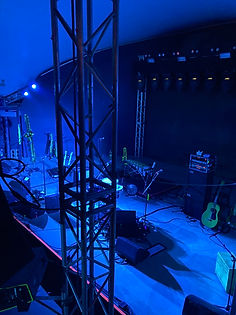
A view from the ADA section of Moody Amphitheater in Austin during the Wilco performance in September 2023. Picture by: Rease Young
Ramp N’ Roll: Finding Accessibility in Music Venues
By Rease Young
Music is one of the most accessible mediums out there, and for many, concerts are a way for everyone to come together and unite over a shared love of the artist they’re seeing. However, accommodations for people with disabilities at concerts are harder to come by.
Grace McKinney, a concert goer from Liberty Hill, knows that accessibility in places can sometimes be a struggle, but was lucky to have received fast communication from the Moody Center in Austin.
“So, the Harry Styles concert was the first one that I had really ever used [ADA accommodations] before. And I had not even thought of using it ever before. My mom is like very tuned in and helpful with all my health stuff and chronic pain,” McKinney said, “When she got in touch with people at Moody, they were like, ‘Oh yeah, like we can totally do that,’ which was shocking to me because I had never even thought about it.”
Since Congress passed the Americans with Disabilities Act in 1990, all businesses are prohibited from discriminating against people with disabilities, including music venues. Venues must have a certain number of seats to satisfy the ADA ruling, but depending on the size of the venue, that one percent isn’t enough, especially for fans who may want to be closer to the stage. (Most ADA seats are situated in the back or sides of the venue).

For Callie Thoresen, the accessibility coordinator at Stubb’s Bar-B-Q Austin, this is a concept that she has to think about daily. Stubb’s holds over 100 shows a year – and for many of those shows, there are fans who need these accessible areas.

“I would extend the balcony deck to them, but I would make sure that you know they have accessibility,” Thoresen said, “If they needed a chair, let's say I'd have a chair ready right away, like reserve seating for them right versus just waiting until they show up, just if we have like a full cap event going on.”
Disabilities can be either visible or invisible, and when it comes to invisible disabilities, some fans think that security should be aware of them. Sammie Allemang, a Texas State student who has attended shows since she was young, thinks venues and the artist’s team can do more when it comes to seating for people with invisible disabilities.
“I think it just depends on the venue more than the artist. However, the artist (or their team) can make sure people with disabilities are cared for,” Allemang said, “I recently saw recently someone with epilepsy had to leave a concert because of where her seat was compared to the stage lighting… the venue said there was nothing they could do.”
For fans, knowing where the ADA seating is in venues is extremely important. Out of 43 venues in Texas, nine did not have accessibility plans stated on their website nor did they even have evidence of having ADA seats or certain spots created for people with disabilities. This may be due to historical spots (mainly used for country dancing) not being updated to today’s standards, or in the case of venues in East and West Texas, not having enough star power to have fans driving to those areas instead of the Texas concert hotspots: Austin, Dallas, Houston and San Antonio.
Although she often sees signage for accessibility seating, Austin concert goer London Buddin believes there’s a bigger problem at hand when it comes to venue safety.
“I think one of the bigger problems I’ve seen is uneven ground at venues,” Buddin said, “If you’re going to one of those outdoor venues, and you’re wheelchair bound, you can’t [comfortably] roll.”
Another thing that doesn’t roll is ticket prices in ADA sections. In the Americans with Disabilities Act of 1990, it is required that tickets to events should be sold at the same prices to those who usually pick out normal seats. In many bigger venues, ADA-specific sections are closer to the back of the venue, where many cannot see the stage well.
Stubb's Bar-B-Q's ADA section is to the right of the main stage - this is the view from that section. Photo by Rease Young
This chart is a tally of how many venues in Texas have dedicated segments to accessibility seating. Chart by Rease Young


The gray portions to the right represent average seating (left) versus ADA seating (right). This is for the Bad Bunny Most Wanted Tour in April 2024. Information by Ticketmaster via Moody Center in Austin ; screenshots provided by Rease Young
An example of this is popular Latin singer Bad Bunny coming to Austin’s Moody Center for his Most Wanted Tour. A ticket for the average stadium seat will cost someone around $243, however, one section over in ADA seating will cost the fan around $315, not to mention the “buddy” system put in place for ADA seating which requires a fan with a disability to buy two tickets – one for them, one for someone to “take care of them”.
If a college student wanted to see Bad Bunny in the ADA section, the show alone would cost them about 630 dollars, and that’s before fees and taxes. To put that in a local perspective, only five San Marcos apartments have rent costs less than that.
What can be done to ensure the safety, but also the enjoyment of shows for people with disabilities? Thoresen wants music professionals to be aware of who they’re catering to.
“Making it known that there’s accessibility in the facilities or making that stuff available is important,” Thoresen said, “You know, having it on your website, having someone to reach out to when they arrive. Advocacy is priority.”